
Rooms with little natural light usually look best in light, warm colors that bounce back as much light as possible. As the days get shorter, a dim hallway or basement family room is a good reason to plan interior painting with brightness in mind.
Our West Michigan painting contractors help homeowners pick colors that stay cheerful through the gray months.
Here's what you need to know about choosing paint for a dim room.
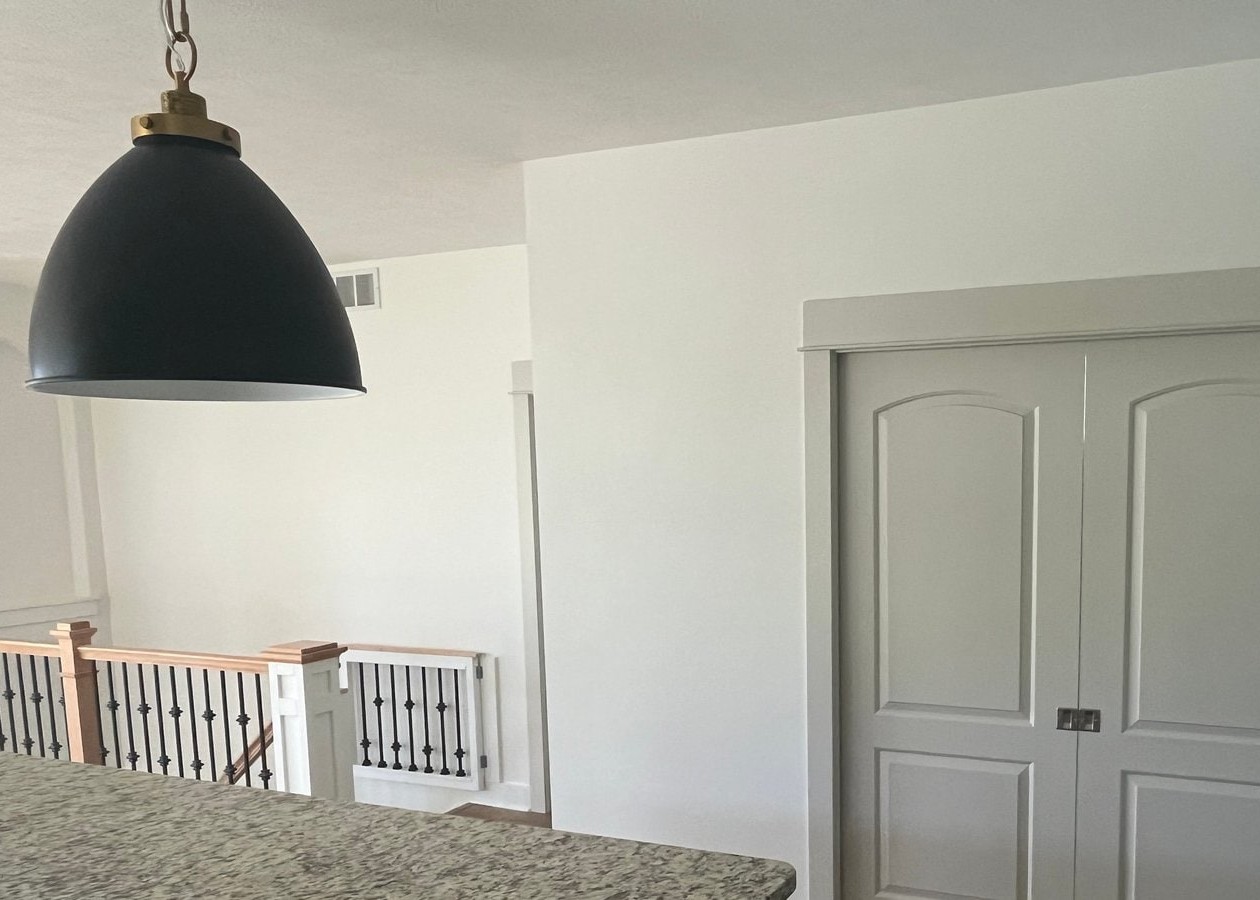
Why Dim Rooms Change How Paint Looks
Paint color is really reflected light, so a room without much sun has less to work with. Benjamin Moore notes that can be muted and toned down.
That softer, cooler light pulls many colors toward gray or blue. Short, cloudy winter days only add to the effect.
Check the LRV Before You Choose
Every paint color has a light reflectance value, or LRV, on a scale from 0 to 100. Sherwin-Williams prints on the back of its color chips.
A score of 0 absorbs all light, and 100 reflects all of it. In a room with little sun, a higher number gets more brightness out of the light you already have.
Warm Whites and Soft Neutrals Work Hardest
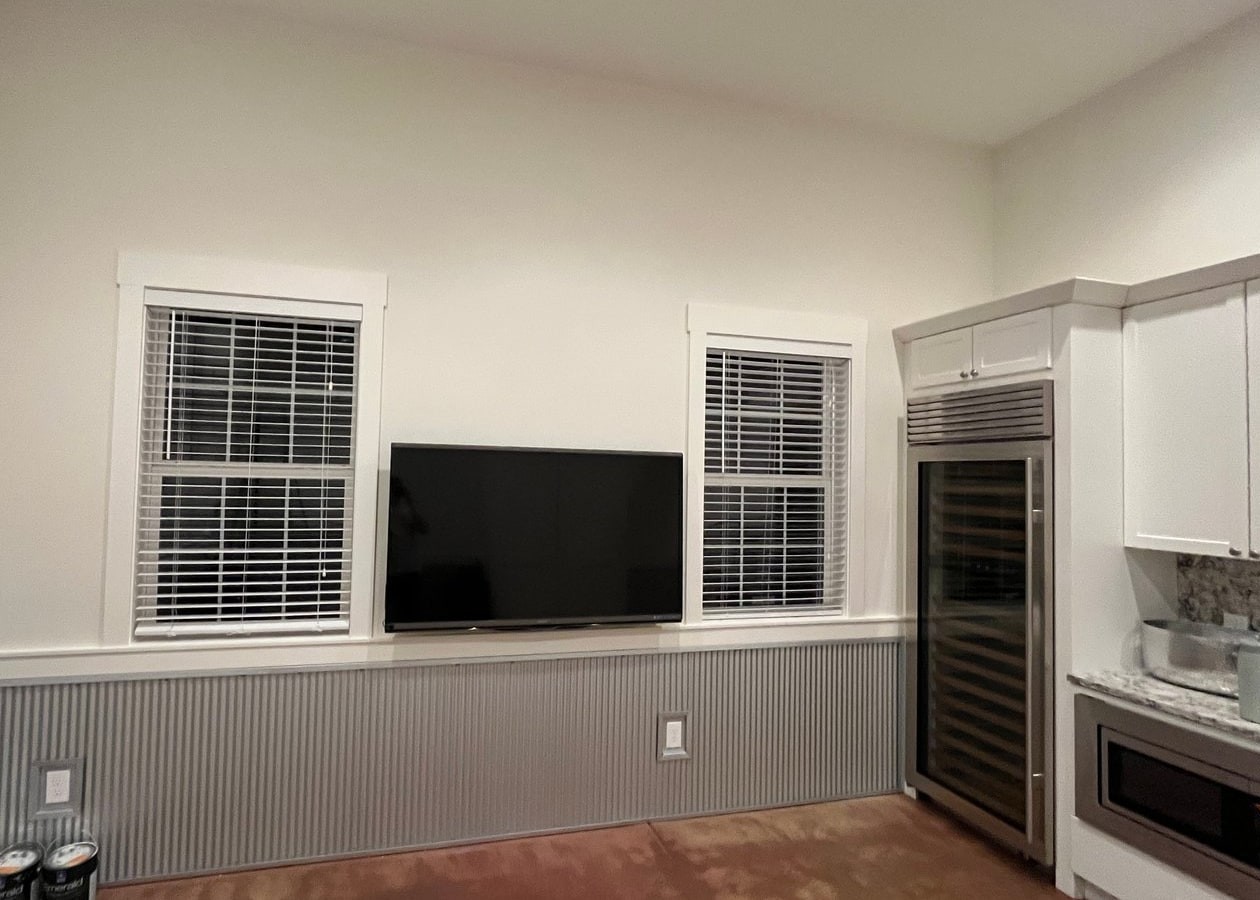
Stark, cool whites and blue-leaning grays often look flat in a dim space. Benjamin Moore suggests offsetting cool northern light with a clean white that has a hint of yellow.
Creams, warm beiges, and light greige shades with a yellow or red undertone keep a room inviting. Paint can also brighten dark, cramped areas, which is why a good kitchen paint job can change how a whole space feels.
Pick a Sheen That Reflects More Light
Sheen matters almost as much as color. Sherwin-Williams explains that describe how much light a painted surface reflects, and matte colors tend to look darker in low light.
An eggshell or satin finish returns more light than flat paint without the glare of a high gloss. Higher sheens also show wall flaws more easily, so careful patching and priming come first.
Don't Forget the Ceiling
The ceiling is the largest open surface in most rooms, and it sends light back down. Sherwin-Williams says a can create the illusion of higher ceilings.
Using the same sheen on the walls and ceiling keeps the room looking cohesive.
Test Colors in Your Own Lighting
A chip under store lights will not look the same on your wall. Put up large samples and check them in the morning, the afternoon, and at night with your lamps on.
Bulbs change the result, too. The Department of Energy notes that runs from a yellowish warm white to a bluish cool white.
Plan the Project for the Darker Months
Late fall is a practical time to start, since lower winter humidity helps interior paint dry evenly. Schedules also tend to open up after the busy summer season.
Most one-room projects wrap up within a couple of days, depending on size and prep work. These interior house painting answers cover what professional prep includes.
Frequently Asked Questions
Why Do White Walls Look Gray in a North-Facing Room?
North light is cool and indirect, so it adds a blue-gray cast to neutral whites. A white that looked crisp at the store can read shadowy on your wall, especially on overcast days.
Benjamin Moore recommends countering that cool cast with a white that carries a hint of yellow. Testing a large sample on more than one wall shows how the color shifts through the day.
Do Warm or Cool Light Bulbs Change How Paint Looks?
Yes, and in a dim room the bulbs often matter more than the sun. Warm bulbs push walls toward yellow and cream, while cool bulbs make grays and blues look sharper.
The Department of Energy notes that most incandescent bulbs give off warm light around 2,700 K. Checking paint samples under the bulbs you actually use at night avoids surprises.
Can Dark Paint Colors Work in a Room With Little Light?
They can, if the goal is a cozy room rather than a brighter one. Deep navy, green, or charcoal can feel intentional in a den or office that never gets much sun.
Sherwin-Williams notes that matte colors look darker in low light. A satin or eggshell finish helps a dark wall show its color instead of reading close to black.
What Interior Paint Finishes Does Gunneson Painting Offer?
Gunneson Painting works with water-based and oil-based interior paints in flat, eggshell, satin, semi-gloss, and high gloss finishes. The right choice depends on how much light the room gets and how much daily wear the walls take.
The team also repairs minor wall imperfections and applies primer as needed, so a reflective finish goes on smooth and even.
Does Gunneson Painting Help Homeowners Choose Paint Colors?
Yes. Before work starts, the team walks you through color choices, prep, and finish options so each room gets the right attention.
Gunneson Painting offers free quotes for interior painting in Rockford, Holland, Grand Rapids, Ada, and the surrounding communities. To start, call Gunneson Painting at (616) 884-7400.
Brighten Your Home Before Winter
The right color, sheen, and lighting can make even a dim room feel open and welcoming.
If you are ready for interior painting that holds up through the darker months, our West Michigan painting company can help you choose with confidence. Call Gunneson Painting today at (616) 884-7400 or request a quote online.